Diwali 2026: History, Significance & Eco-Friendly Ideas
Diwali 2026 falls on Sunday, 8 November. Discover the stories behind the Festival of Lights, what each of the five days means, and simple ways to celebrate with less smoke, less waste and just as much joy.
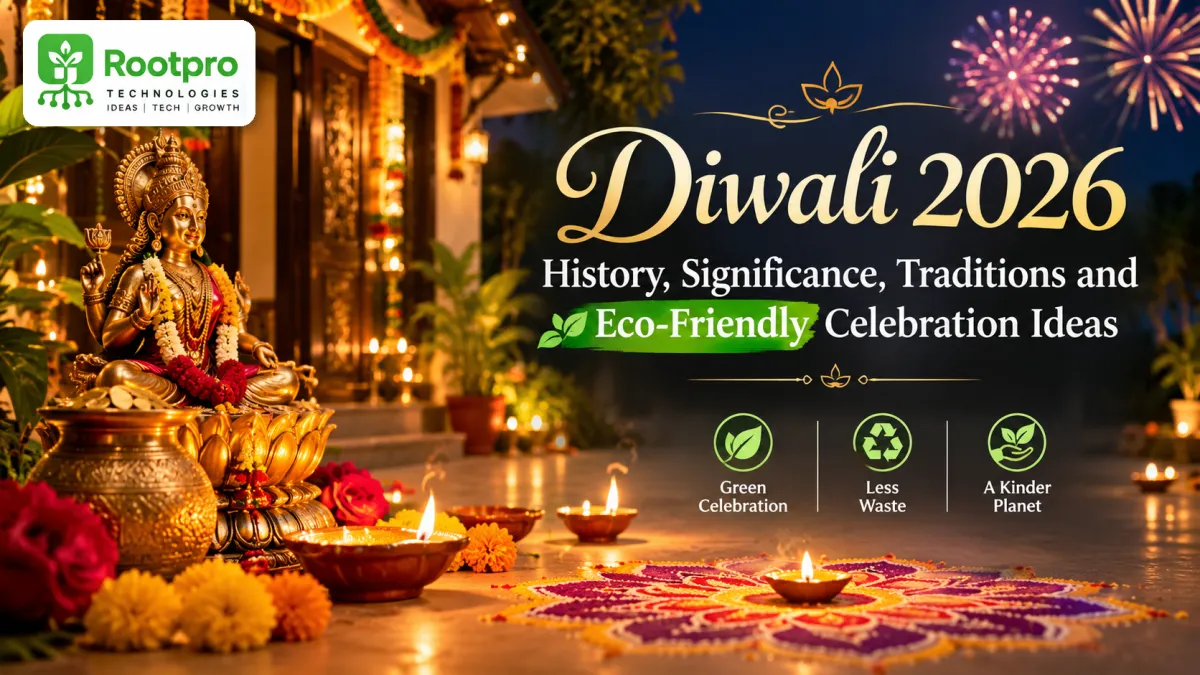
Diwali 2026: History, Significance, Traditions and Eco-Friendly Celebration Ideas
The Festival of Lights is here. Here is where it came from, what it means, how it is celebrated, and how to make this year's Diwali kinder to the planet.
Introduction: A Festival That Lights Up the World
Few festivals travel as far, or mean as much to as many people, as Diwali (also called Deepavali). Celebrated by Hindus, Jains, Sikhs and some Buddhist communities across India, Nepal, Sri Lanka, Singapore, Malaysia, Fiji, the Caribbean, the UK, North America and beyond, Diwali is a festival of lamps, family, food and fresh beginnings.
In 2026, the main day of Diwali falls on Sunday, 8 November, on the new-moon night (Amavasya) of the Hindu month of Kartik. Whether you are lighting your first diya of the season or preparing a grand family puja, this guide covers the history, the meaning, the five days of rituals, and practical ways to celebrate with less smoke, less waste and just as much joy.
Diwali 2026 at a Glance
| Day | Festival | Date (2026) |
|---|---|---|
| Day 1 | Dhanteras | Around 6 November |
| Day 2 | Naraka Chaturdashi (Choti Diwali) | 7 November (Saturday) |
| Day 3 | Diwali / Lakshmi Puja | 8 November (Sunday) |
| Day 4 | Govardhan Puja / Annakut | 9 November (Monday) |
| Day 5 | Bhai Dooj | 11 November (Wednesday) |
A note on timings: Lakshmi Puja is traditionally performed in the evening during Pradosh Kaal, the twilight period after sunset, while the Amavasya tithi is in force. Published muhurat windows differ from source to source and from city to city (for example, Delhi's evening window starts a little before 6 PM, while cities further south and west start later). Regional customs also differ: in Tamil Nadu, Deepavali is often marked with an early-morning oil bath tied to Naraka Chaturdashi. Please check your local Panchang or temple calendar for the exact time in your city.
The History of Diwali: Many Stories, One Light
Diwali does not have a single origin story. It is a festival woven from several traditions, which is part of why it resonates so widely. The word Deepavali comes from Sanskrit: deepa (lamp) and avali (row), literally "a row of lamps."
The Return of Rama
The most widely told story, especially in North India, is from the Ramayana. After fourteen years of exile and the defeat of the demon king Ravana, Prince Rama returned to Ayodhya with Sita and Lakshmana. The people of Ayodhya are said to have welcomed him by lighting rows of earthen lamps along the path, a tradition that Diwali continues today.
Krishna and Narakasura
In South India, and in Tamil Nadu in particular, the festival is strongly linked to Lord Krishna's victory over the tyrant Narakasura. Because the demon was defeated before dawn, people wake up before sunrise, take a ritual oil bath, wear new clothes, and burst crackers or light lamps to celebrate the end of oppression.
Goddess Lakshmi and the Churning of the Ocean
Another tradition says that Goddess Lakshmi, the deity of wealth, prosperity and good fortune, emerged from the cosmic ocean during the Samudra Manthan (churning of the ocean of milk) and chose Lord Vishnu as her consort. Diwali night is when Lakshmi is believed to visit clean, well-lit, welcoming homes, which is why houses are scrubbed, decorated and filled with lamps.
King Bali and Vamana
In parts of India, especially Kerala and Gujarat, the story of the generous demon king Bali and Vishnu's Vamana avatar is remembered. Vamana's request for three paces of land ended with Bali being sent to the netherworld, with the boon that he could return to be remembered by his people once a year.
The Pandavas' Homecoming
Some regions associate Diwali with the Pandavas of the Mahabharata returning from exile after their thirteen-year ordeal, again marked by light and celebration.
Jain, Sikh and Buddhist Traditions
Diwali is not only Hindu.
- Jainism: Diwali marks the nirvana (liberation) of Lord Mahavira, the last Tirthankara. Lamps symbolize the light of knowledge that remains after his physical departure.
- Sikhism: The same period is observed as Bandi Chhor Divas, the "Day of Liberation," remembering the release of Guru Hargobind Ji from Gwalior Fort in 1619 along with a number of imprisoned kings. The Golden Temple in Amritsar is illuminated spectacularly.
- Newar Buddhism (Nepal): Communities celebrate related festivals such as Tihar or Swanti, with lamps, mandalas and honouring of animals and siblings.
Historical Records
References to festivals of lamps appear in ancient Sanskrit texts, including several Puranas, and in accounts by travellers and court writers across the centuries. Over time, Diwali also became tied to the agricultural calendar, marking the end of the monsoon harvest season, and to the mercantile calendar, with the new accounting year beginning for many business communities.
The Significance of Diwali
Light Over Darkness
The central message is the victory of light over darkness, knowledge over ignorance, good over evil, and hope over despair. The diya is both a physical lamp and a symbol of inner light.
Prosperity and Gratitude
Lakshmi Puja is about welcoming abundance, but also about gratitude for what one already has. Traditionally, accounts are closed and new account books are opened and blessed (Chopda Pujan), making Diwali a financial new year for many families and traders, particularly in Gujarat and Rajasthan.
Renewal and Reconciliation
Cleaning the house, paying off debts, buying something new, and forgiving old quarrels are all part of the festival's spirit. It is a time to reset relationships as much as rooms.
Family and Community
Diwali brings together extended families, neighbours and friends. Gift exchanges, shared meals and visits cut across social boundaries and make this one of the most community-driven festivals of the year.
The Five Days of Diwali
Day 1: Dhanteras
Dhanteras (from dhan, wealth, and teras, the thirteenth lunar day) begins the festival. Families clean their homes and buy a small piece of gold, silver or a new utensil as a symbol of good fortune. It is also associated with Dhanvantari, the physician of the gods and patron of Ayurveda, so health is honoured alongside wealth.
Day 2: Naraka Chaturdashi (Choti Diwali)
Observed on the day before the main Diwali, this day remembers the defeat of Narakasura. Many families wake before dawn for an oil bath and apply fragrant herbal pastes. Small lamps are lit in the evening, and in South India this is often when the biggest morning celebration happens, with new clothes, sweets and family visits.
Day 3: Diwali and Lakshmi Puja
The main day. Homes are cleaned and decorated with rangoli (or kolam in Tamil Nadu), flower garlands and torans. In the evening, families perform Lakshmi-Ganesha puja with flowers, sweets, incense and lamps. Lamps and lights are placed on windowsills, doorways, balconies and courtyards. Dinner, sweets and gifts follow.
Day 4: Govardhan Puja and Annakut
This day remembers Lord Krishna lifting Govardhan Hill to protect villagers from torrential rain. Temples prepare mountains of food (Annakut) as an offering, and in several communities it is also New Year's Day, such as the Gujarati New Year (Bestu Varas).
Day 5: Bhai Dooj
The festival closes with a celebration of the sibling bond. Sisters apply a tilak on their brothers' foreheads, pray for their long life, and brothers give gifts in return. Similar festivals are known as Bhau Beej in Maharashtra and Bhai Phota in Bengal.
Traditions and Customs You'll See
- Diyas and lights: Earthen lamps filled with oil or ghee, now often joined by string lights, lanterns and candles.
- Rangoli and kolam: Floor art made with rice flour, coloured powders, flower petals or coloured sand at thresholds to welcome guests and the goddess.
- New clothes and shopping: Wearing new or best clothes is a near-universal tradition, and the pre-Diwali weeks are a peak shopping season.
- Sweets and snacks: Laddus, barfi, jalebi, gulab jamun, kaju katli, murukku, adhirasam, chakli and countless regional specialities. In many Tamil homes, a ginger-based Deepavali marundhu (or legiyam) is eaten to aid digestion after the feast.
- Gifting: Dry fruits, sweets, home decor and sustainable gifts are exchanged with family, friends, neighbours and colleagues.
- Cards and games: Playing cards, especially in North and West India, is a long-standing, if debated, custom on Diwali night.
- Fireworks: Traditionally part of the celebration, though increasingly questioned for environmental and health reasons (more on that below).
Regional Flavours
- Tamil Nadu: Early-morning oil bath, new clothes, sweets, family visits and a day often built around the Naraka Chaturdashi tradition.
- West Bengal and Odisha: Kali Puja is performed on the same new-moon night.
- Maharashtra: Vasu Baras and Abhyang Snan, along with the famed faral (festival snacks).
- Gujarat and Rajasthan: Chopda Pujan and New Year celebrations.
- Goa: Giant effigies of Narakasura are burned before dawn.
- Nepal: Tihar, which includes honouring crows, dogs, cows and oxen before the main Lakshmi worship.
The Hidden Cost: Diwali and the Environment
As lovely as Diwali is, its modern form has an environmental footprint that many families are rethinking.
- Air pollution: In many Indian cities, air quality drops sharply in the days around Diwali. Firecrackers release fine particulate matter and metals, and this coincides with the cooler season, when pollutants linger closer to the ground. Children, older people and those with asthma or heart conditions are most affected.
- Noise pollution: Loud crackers stress pets, street animals, birds, infants, hospital patients and the elderly.
- Waste: Plastic decorations, disposable tableware, single-use gift wrap, and broken cracker debris pile up.
- Water pollution: Idol immersions and chemical colours can contaminate lakes and rivers.
- Food and energy waste: Over-cooking, over-gifting and leaving large strings of lights on all night add up.
Several Indian states and courts have introduced restrictions or time limits on firecrackers, with "green crackers" allowed in some areas. Rules differ by city and change often, so check your local regulations before buying or using any.
Eco-Friendly Diwali Celebration Ideas
Celebrating sustainably does not mean celebrating less. It means choosing wisely. Here are practical ideas you can use this year and in the years to come.
1. Light Up with Clay Diyas
- Choose handmade earthen diyas from local potters. They are biodegradable and support artisans.
- Use ghee, sesame oil or coconut oil instead of paraffin wax.
- Reuse your diyas next year: wash, dry and store them.
- Where you need long-lasting light, use LED string lights and solar-powered lanterns, and switch them off before bed.
2. Make Natural Rangoli
- Use rice flour, turmeric, kumkum, flower petals, leaves, lentils and spices instead of synthetic coloured powders.
- Try a floating flower rangoli in a bowl of water, or a sand-and-seed design that can go to the garden afterwards.
- Avoid plastic stencils and glitter, which are microplastics.
3. Decorate with Flowers, Fabric and Upcycled Items
- Marigold and mango-leaf torans are traditional, beautiful and compostable.
- Reuse last year's fabric, cloth bunting and brass or copper pieces.
- Make lanterns from old newspaper, cardboard, glass jars or terracotta.
- After the festival, compost flowers and leaves rather than throwing them away.
4. Rethink Crackers
- The cleanest option is no crackers at all. Many families now replace them with a lamp-lit evening, music, drums, a rangoli contest or a rooftop dinner.
- If you do use crackers, choose low-emission or certified "green" options where permitted, follow the official time windows, and avoid crowded or sensitive areas.
- Keep pets indoors in a quiet room, and consider noise-reducing options for babies, older relatives and anyone with respiratory conditions.
- Consider light-and-sound alternatives such as sparklers made from non-toxic materials, a community drum circle, or a lantern release alternative that uses reusable lanterns rather than sky lanterns, which can be a fire and wildlife hazard.
5. Gift Sustainably
- Give plants and saplings, handmade items, books, local sweets, dry fruits in reusable tins or jars, or experiences like a cooking class.
- Wrap gifts in cloth (furoshiki style), newspaper, banana leaf or reusable bags instead of plastic or foil paper.
- Buy from local artisans, women's self-help groups and small businesses whenever possible.
- Consider gifting a donation in someone's name to a cause they care about.
6. Cook Smart and Waste Less
- Plan quantities realistically, and pack leftovers for neighbours or domestic help rather than discarding them.
- Use steel, brass, banana-leaf or areca-leaf plates and reusable cups rather than disposable plastic.
- Make traditional sweets at home using seasonal, local ingredients when possible, and reduce excess sugar and deep-frying where you can.
7. Keep Your Puja Green
- Choose clay or natural idols of Lakshmi and Ganesha, and avoid those made of plaster of Paris and chemical paint.
- Immerse idols in a bucket or tub at home, and use the water for plants, instead of immersing in lakes or rivers.
- Collect puja flowers and offerings for composting or flower recycling initiatives.
8. Save Energy and Water
- Switch to LED lighting for decorations.
- Turn off the extra lights at a fixed time each night.
- Clean your home mindfully: use vinegar, lemon and baking soda instead of harsh chemicals, and avoid wasting water.
9. Celebrate with People Who Need It
- Donate clothes, utensils, books, toys or food you no longer need before you shop for new ones.
- Share sweets and a meal with sanitation workers, security guards, delivery staff and neighbours.
- Support orphanages, elderly homes and animal shelters, which often welcome volunteers at this time of year.
10. Make It a Family Learning Moment
Involve children in diya painting, rangoli making and composting. When younger family members see celebration and care for nature as part of the same tradition, the habit lasts.
A Simple Eco-Diwali Checklist
- Clay diyas and natural oils
- Flower, leaf or rice-flour rangoli
- LED or solar lights, switched off at night
- Cloth or paper-based gift wrap
- Reusable plates and cups
- Leftovers shared, not wasted
- Clay idols, immersed at home
- Crackers skipped or minimized, rules followed
- Pets and elders kept comfortable
- Flowers and leaves composted
Safety and Wellbeing Tips
- Keep lamps and candles away from curtains, saris and dupattas, and never leave them unattended.
- Keep a bucket of water or a fire extinguisher nearby.
- Wear cotton clothes if you are near flames, as synthetic fabrics catch fire more easily.
- If you have asthma or other respiratory conditions, stay indoors during peak smoke hours and keep medication handy.
- Eat mindfully: festival food is delicious but heavy, so balance it with water, fruit and walks.
Final Thoughts
Diwali has survived and evolved for centuries because it speaks to something universal: the human need to believe that light, kindness and renewal will always win. The lamp you light tonight is part of a very long line of lamps. This year, you can choose to keep that line bright while also keeping the air a little cleaner, the streets a little quieter and the celebration a little more generous.
Wishing you and your loved ones a bright, safe, joyful and sustainable Diwali.
Happy Diwali 2026!
Dates and muhurat timings in this post are based on published Panchang sources and vary by city and tradition. Please confirm the timings for your location with your local Panchang or temple before performing rituals.