How digital textbooks are changing education?
Discover how digital textbooks are changing education through interactive learning, easy access, personalization, AI integration, and smarter study.
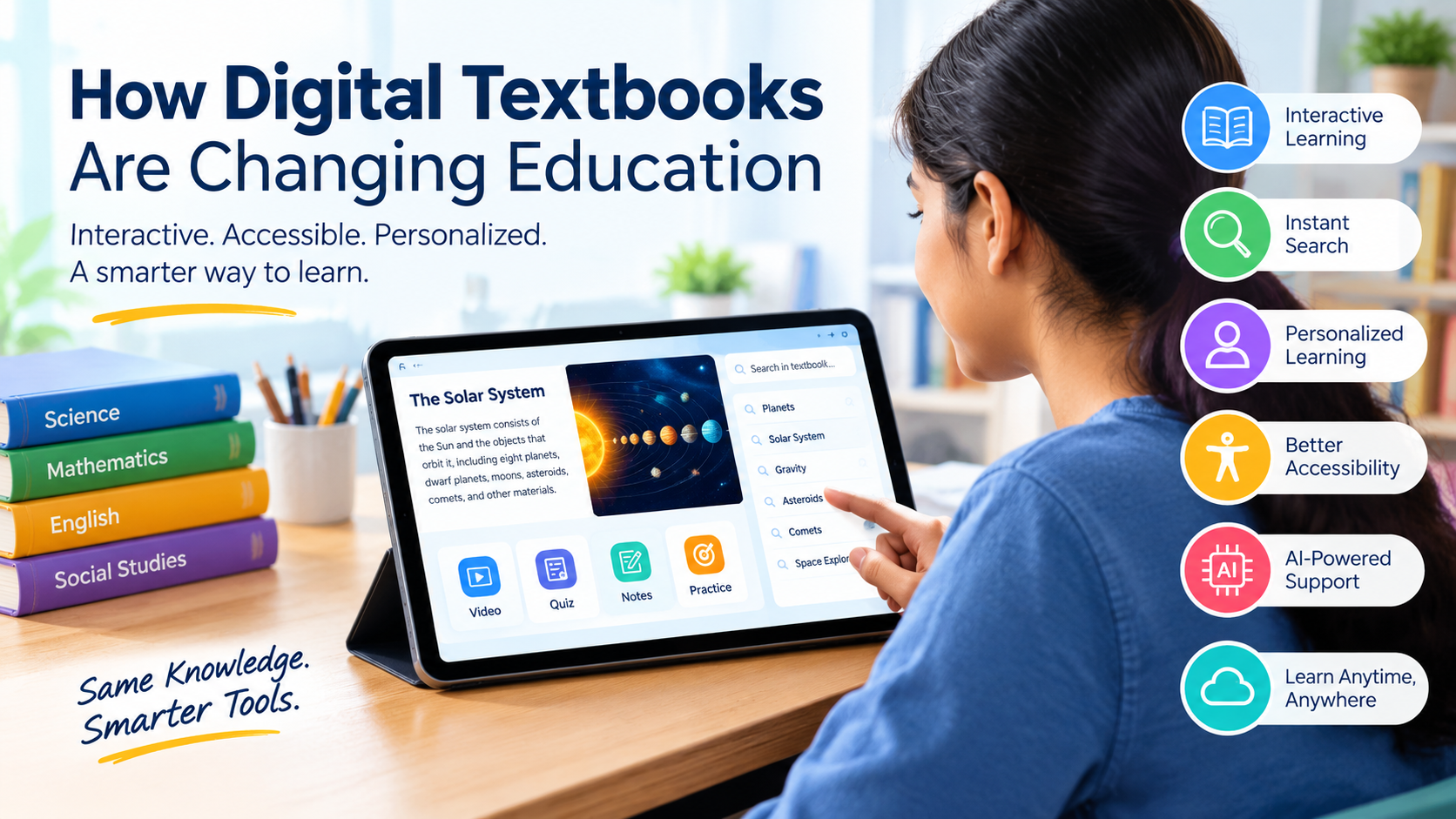
Digital textbooks are transforming the way students access, understand, revise, and interact with educational content. What started as simple electronic versions of printed books has evolved into a more interactive learning experience that can include videos, quizzes, animations, search tools, accessibility features, and links to additional resources.
Today, digital textbooks are becoming an important part of modern education because they make learning more flexible, searchable, interactive, and accessible.
Key Takeaway: Digital textbooks do not simply replace printed books. They can extend the textbook with digital resources that help students learn in different ways.
What Are Digital Textbooks?
A digital textbook is an electronic version of a textbook that can be accessed using devices such as computers, tablets, or smartphones.
However, modern digital textbooks can offer much more than a digital copy of a printed book. Depending on the platform, they may include:
- Interactive diagrams
- Videos and animations
- Quizzes and practice questions
- Search and navigation tools
- Digital highlighting and notes
- Audio or accessibility features
- Links to additional learning resources
- Interactive exercises
- Multilingual learning resources
The OECD describes digital learning resources as ranging from static resources such as digital textbooks to more dynamic resources involving interactive and adaptive learning experiences. OECD
Why Are Digital Textbooks Becoming Important?
- Traditional textbooks remain valuable, but students today increasingly learn through a combination of books, websites, videos, educational platforms, and digital resources.
- Digital textbooks bring these resources closer to the core learning material.
- Instead of reading a chapter and then searching separately for supporting resources, a digital textbook can potentially connect the chapter with additional explanations, activities, assessments, and multimedia content.
The result?
Learning becomes more connected and flexible.
1. Easy Access to Learning Materials:
One of the biggest advantages of digital textbooks is accessibility.
A student may carry several textbooks on a single device instead of carrying multiple heavy books.
Digital textbooks can be accessed through:
- Smartphones
- Tablets
- Laptops
- Desktop computers
- Educational platforms
This makes it easier for students to study at home, in school, while travelling, or during revision sessions, depending on the availability of the device and internet connection.
For example, India's DIKSHA platform provides access to digital textbooks and allows students to discover them through book names, keywords, DIAL codes, and QR codes. diksha.gov.in
2. Digital Textbooks Make Learning More Interactive:
A printed textbook mainly provides text, images, diagrams, and exercises.
A digital textbook can go further.
A chapter about the solar system, for example, could include:
Text → Diagram → Animation → Video → Interactive activity → Quiz
This can help students explore a concept instead of simply reading about it.
Interactive digital textbooks are already used in several education systems, with features such as videos, animations, self-assessments, interactive exercises, and personalised learning components. OECD
Important: Interactivity is useful when it supports the learning objective. Adding technology simply for entertainment does not automatically improve learning.
3. Searching Becomes Much Faster:
Finding a particular topic in a printed textbook can sometimes take several minutes.
With a digital textbook, students can often use the search function to locate:
- Definitions
- Keywords
- Formulas
- Concepts
- Chapter names
- Examples
- Important terms
For exam preparation, this can make revision more efficient.
Example
Suppose a student wants to revise Newton's Laws of Motion.
Instead of manually checking multiple pages, they can search for:
"Newton's Laws"
The digital textbook can take them directly to relevant sections.
This is especially useful when students are reviewing large amounts of material before examinations.
4. Digital Textbooks Can Connect Physical and Digital Learning:
Digital education does not necessarily mean abandoning printed textbooks.
India provides a good example of how physical and digital learning can work together.
Through DIKSHA's Energised Textbooks, QR codes printed in physical textbooks can connect students to related digital resources. These resources can include textbook-linked learning content, and the linked content can be updated dynamically. diksha.gov.in
This creates a simple learning flow:
Printed textbook → Scan QR code → Digital content → Learn → Practise
This approach combines the familiarity of a physical textbook with the flexibility of digital learning.
5. Learning Can Become More Accessible:
Digital textbooks can also support inclusive education when they are designed properly.
Features such as:
- Adjustable text size
- Screen-reader compatibility
- Audio support
- Captions
- Alternative text
- Flexible display options
can make educational content easier to access for different learners.
UNESCO has highlighted the role of accessible digital learning materials and assistive technologies in helping learners with disabilities participate more fully in education. UNESCO
However, accessibility should be designed into digital textbooks from the beginning, rather than treated as an optional feature.
6. Digital Textbooks Support Flexible Learning:
Every student does not learn at exactly the same speed.
Some students may understand a chapter immediately, while others may need:
Explanation → Example → Practice → Revision
Digital learning resources can support this flexibility by allowing students to revisit sections, access additional resources, and practise concepts repeatedly.
This is particularly useful for students preparing for examinations because they can return to difficult chapters whenever necessary.
7. Digital Textbooks and AI Are Creating New Possibilities:
One of the most interesting developments is the combination of digital textbooks and Artificial Intelligence (AI).
AI-powered learning systems can potentially help students:
- Find information inside learning material
- Explain difficult concepts
- Generate practice questions
- Create revision points
- Summarise sections
- Ask questions about textbook content
- Identify topics that need additional practice
But there is an important rule:
AI should support textbook-based learning, not replace the student's own thinking.
Students should check important information against their textbook, teacher, or reliable educational sources.
A textbook-grounded approach is particularly useful because it keeps learning connected to the actual curriculum and prescribed study material rather than random information from the internet.
8. Digital Textbooks Can Help Teachers Too:
The benefits are not limited to students.
Teachers can use digital textbooks to:
- Share learning resources
- Provide additional explanations
- Assign digital activities
- Connect lessons with multimedia
- Support revision
- Provide supplementary materials
- Encourage independent learning
Teachers can therefore use the digital textbook as a central learning resource rather than relying on a single printed page.
Printed Textbooks vs Digital Textbooks:
| Feature | Printed Textbooks | Digital Textbooks |
|---|---|---|
| Portability | Limited | High |
| Search | Manual | Instant search |
| Videos | Not directly available | Can be integrated |
| Interactive activities | Limited | Possible |
| Annotations | Physical writing | Digital notes/highlights |
| Accessibility features | Limited | Can include assistive features |
| Updates | Requires new edition | Digital content can be updated |
| Internet/device requirement | Usually no | May depend on device/platform |
| Screen exposure | None | Present |
| Distraction risk | Lower | Can be higher |
The important point
This is not a competition between printed and digital textbooks.
The best approach may often be a combination of both.
Challenges of Digital Textbooks:
Digital textbooks have many advantages, but they also come with challenges.
1. Screen Fatigue
Studying for long periods on a screen can be tiring.
Students should take regular breaks and avoid treating digital textbooks as something that must be viewed continuously for hours.
2. Distractions
A smartphone can provide access to a textbook—but it can also provide access to games, social media, messages, and entertainment.
Students need a focused study environment.
3. Device and Internet Access
Not every learner has the same access to:
- Smartphones
- Computers
- Tablets
- Reliable internet
- Electricity
Therefore, digital education needs to consider the digital divide.
4. Information Overload
- More digital content does not automatically mean better learning.
- Students can become overwhelmed when a single topic has too many videos, articles, quizzes, and resources.
Good digital textbook design should prioritise relevant content.
5. Privacy and Data Protection
Some educational platforms collect information about how learners use digital resources.
Schools and technology providers should therefore use responsible data practices and protect students' privacy.
6. Overdependence on Summaries
Students may be tempted to read only summaries instead of studying the actual textbook.
For examinations, this can be risky.
Digital tools should make studying easier—not encourage students to skip the core learning material.
How Students Can Use Digital Textbooks Effectively
Simply owning a digital textbook does not guarantee better learning.
Students should use it strategically.
A simple study method:
Step 1: Read the chapter
Understand the main concepts instead of immediately looking for a summary.
Step 2: Highlight important points
Mark definitions, formulas, examples, and key concepts.
Step 3: Search difficult topics
Use the textbook's search function to revisit related sections.
Step 4: Use supporting resources
If available, watch the relevant video or complete an interactive activity.
Step 5: Practise
Answer questions without looking at the solution.
Step 6: Revise
Return to highlighted concepts and difficult sections.
Step 7: Test yourself
Try practice questions to check whether you actually understood the topic.
Best practice: Read → Understand → Practise → Review → Test yourself.
The Role of Digital Textbooks in Indian Education:
India has been developing large-scale digital education infrastructure.
- DIKSHA, for example, provides digital learning resources connected to school curricula and supports access to digital textbooks through its platform. Its Energised Textbook model connects physical textbooks with digital resources using QR codes. diksha.gov.in
- This model is especially interesting because it does not require students to completely abandon traditional textbooks.
Instead, it creates a bridge between physical books and digital learning.
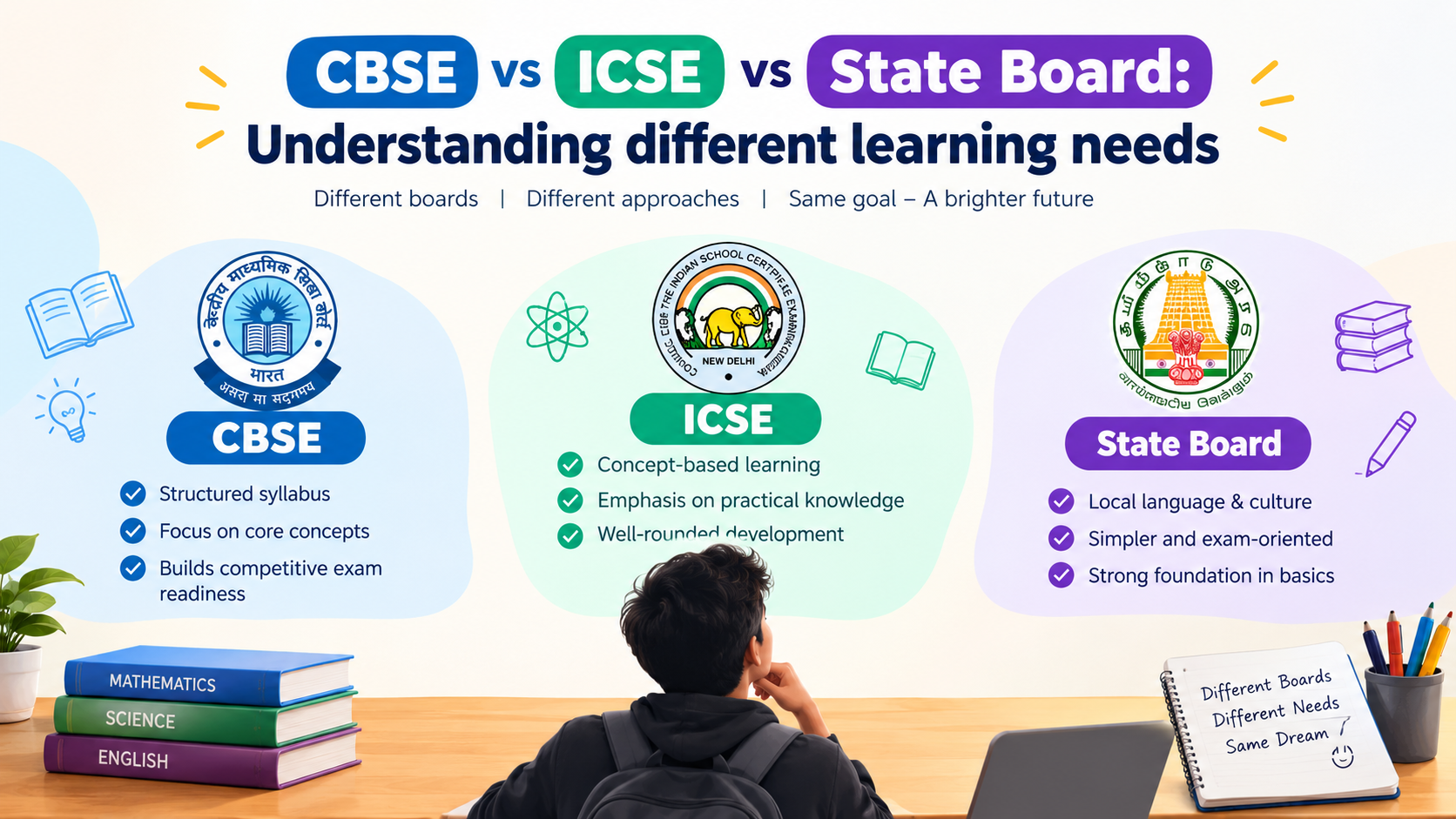
For a diverse education system such as India's, digital resources can also support learning across different subjects, boards, languages, and educational contexts.
The Future of Digital Textbooks:
The future of digital textbooks is likely to move beyond simply converting printed pages into PDF files.
We can expect more emphasis on:
Interactive Learning
Students may interact directly with diagrams, simulations, exercises, and assessments.
AI-Assisted Learning
AI can help students ask questions and receive explanations connected to their learning materials.
Personalised Learning
Digital systems can potentially provide different levels of practice based on a learner's needs.
Multilingual Learning
Digital content can make it easier to provide educational resources across multiple languages.
Accessibility
More digital textbooks can be designed to support learners with different accessibility requirements.
Smart Search
Students may increasingly search textbooks using natural-language questions rather than exact keywords.
The OECD notes that the potential of digital resources lies in moving beyond a traditional linear learning experience toward more interactive and individualised learning. OECD
How Examozhi Fits Into the Digital Learning Experience?
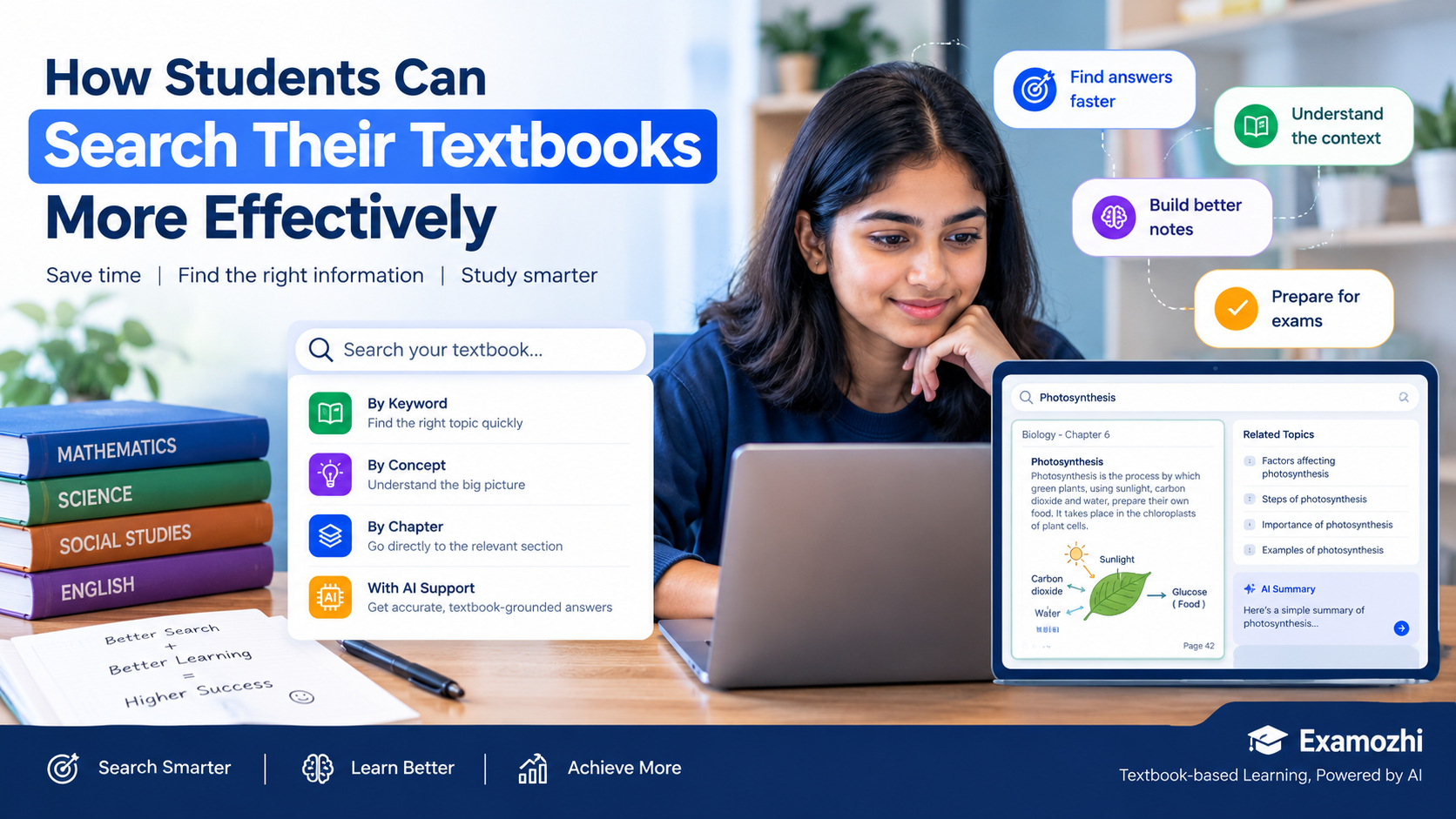
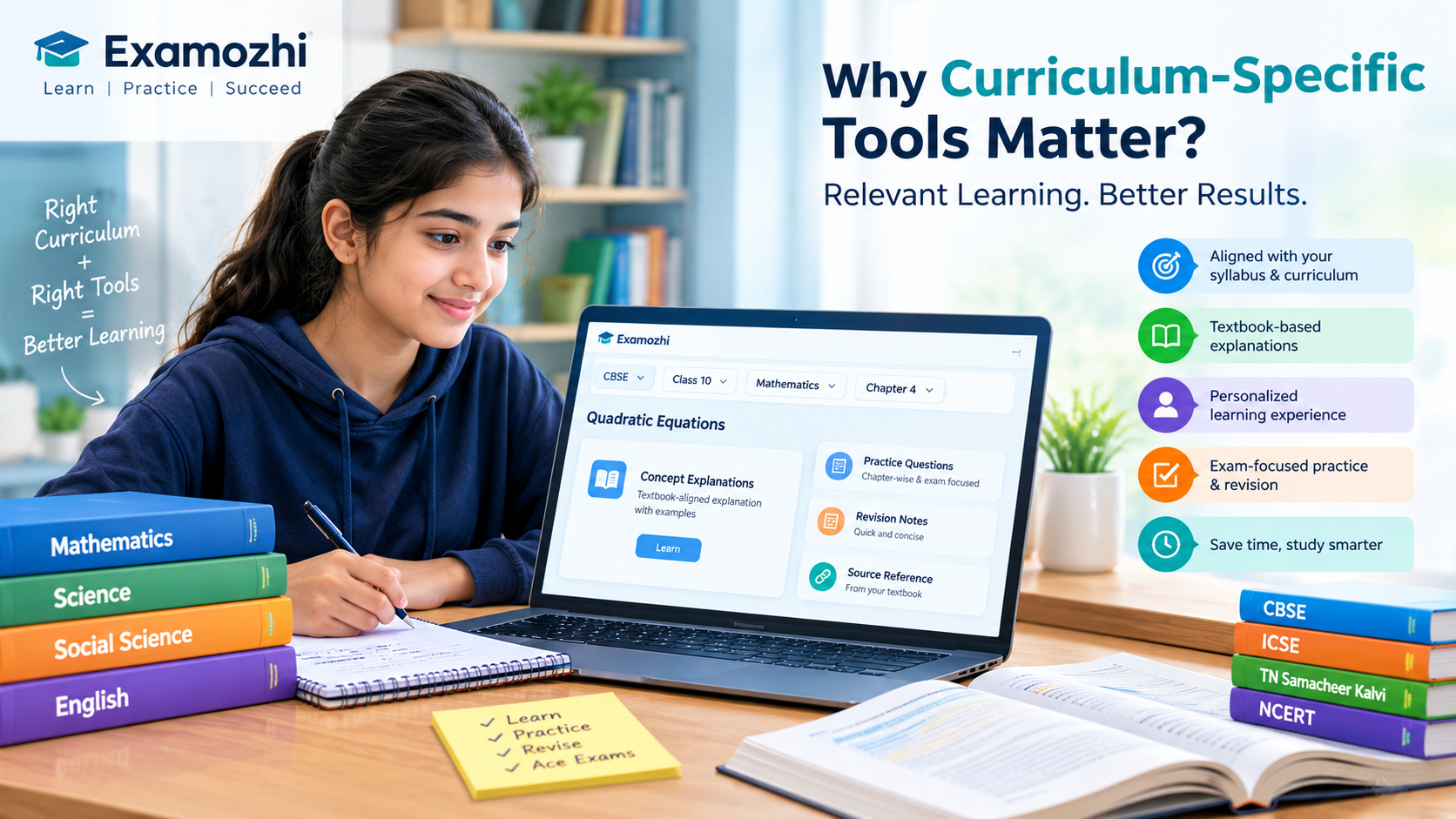
Platforms such as Examozhi can complement the shift toward textbook-based digital learning by helping students work with educational content in a more structured way.
The important principle is simple:
Textbook → Understand → Ask questions → Practise → Revise
Instead of replacing the textbook, AI-powered learning tools can act as a study companion around the textbook.
This approach can help students stay connected to their curriculum while using digital tools to improve understanding and exam preparation.
Explore Examozhi: Examozhi
Digital Textbooks Are Changing the Meaning of a Textbook:
- A textbook used to be something students read.
- A modern digital textbook can become something students:
Read + Search + Watch + Explore + Practise + Interact + Revise
That is the biggest transformation.
The textbook is no longer necessarily a static collection of pages. It can become a gateway to a wider learning environment.
However, technology itself is not the solution to every educational challenge.
The most effective digital learning happens when technology is combined with:
- Good teaching
- Quality educational content
- Active student participation
- Critical thinking
- Practice
- Accessibility
- Responsible technology use
Conclusion:
Digital textbooks are changing education by making learning resources more accessible, searchable, interactive, and flexible.
- They can help students revise faster, explore concepts through multimedia, access resources across devices, and connect physical textbooks with digital learning experiences.
- At the same time, challenges such as screen fatigue, distractions, unequal device access, privacy, and overdependence on technology must be addressed.
The future is therefore not about choosing printed textbooks or digital textbooks.
It is about creating a learning environment where both can be used effectively.
The best digital textbook is not the one with the most technology—it is the one that helps students understand, practise, and learn better.