How Technology Is Transforming School Administration
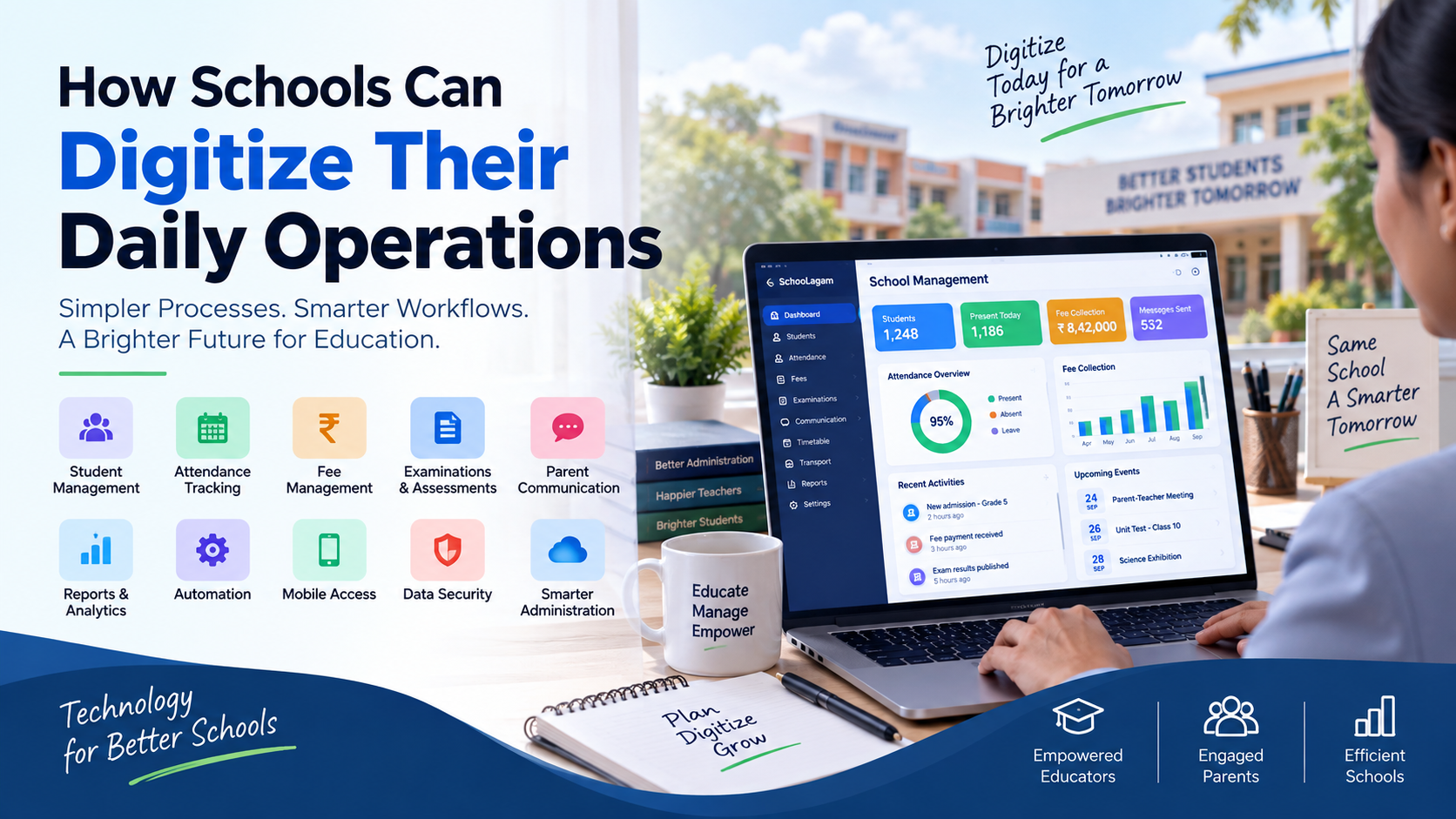
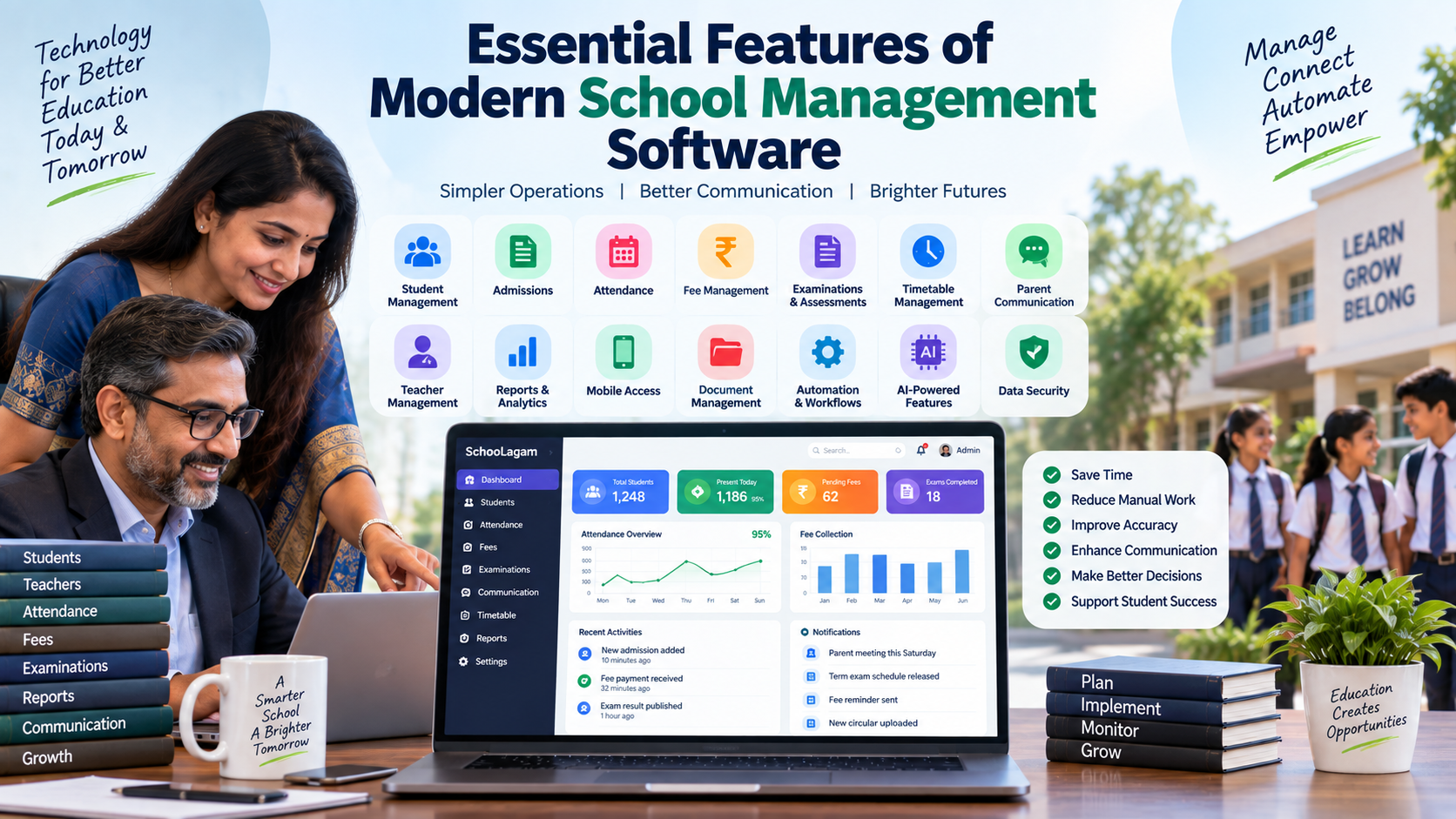
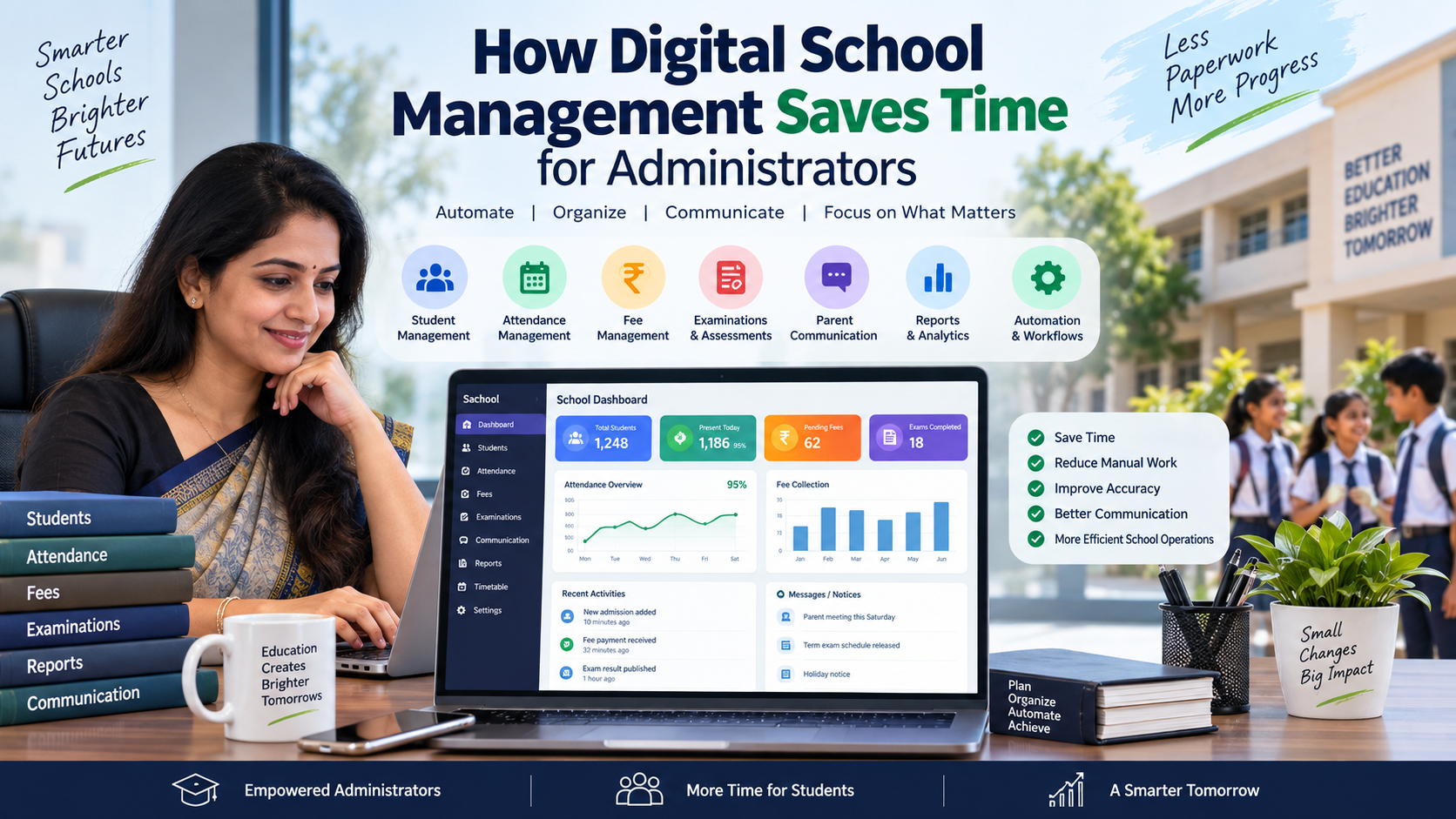
Technology is transforming school administration by reducing manual work, improving communication, centralizing data, automating routine processes, and helping schools make better-informed decisions.
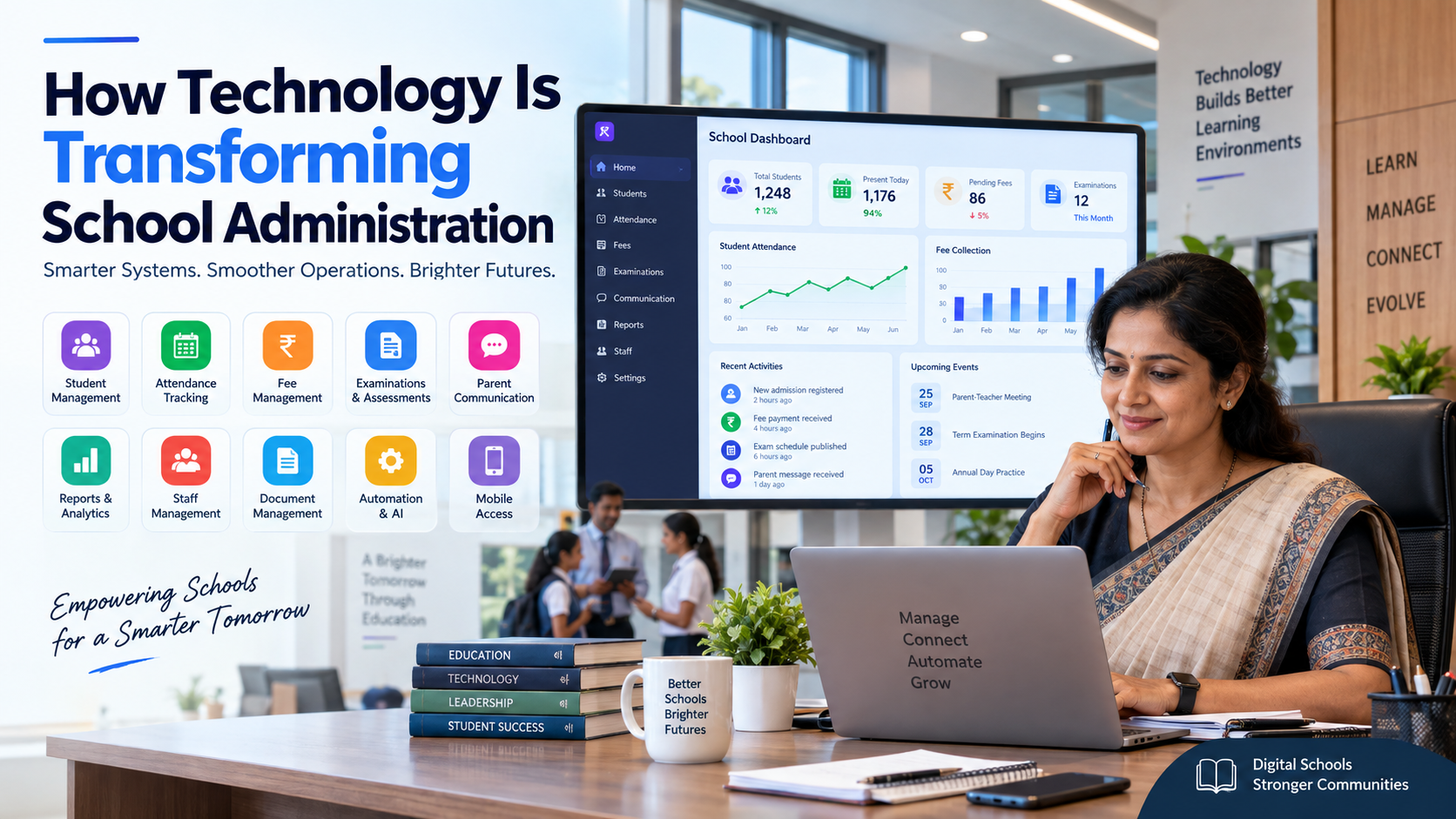
School administration involves hundreds of small tasks every day — managing student records, tracking attendance, collecting fees, communicating with parents, preparing reports, coordinating teachers, organizing examinations, maintaining documents, and responding to information requests.
When these activities depend heavily on paper files, spreadsheets, phone calls, and disconnected systems, administrative teams can spend a significant amount of time searching for information and repeating the same work.
Technology is transforming school administration by bringing these activities into connected digital workflows. Instead of treating technology as simply another software tool, schools can use digital systems to organize information, automate repetitive processes, improve communication, and give administrators better visibility into everyday operations.
For school owners, principals, teachers, administrators, parents, and students, this shift can create a more organized and responsive school environment.
What Is Technology-Enabled School Administration?
Technology-enabled school administration refers to the use of digital platforms, cloud applications, automation, mobile applications, analytics, artificial intelligence, and connected systems to manage school operations.
A modern school may use technology for:
- Student information management
- Admissions
- Attendance tracking
- Fee management
- Parent communication
- Timetable management
- Examination management
- Academic records
- Document management
- Reports and analytics
- Staff coordination
- Notifications
- Online assessments
- Administrative workflows
Instead of storing information separately across multiple files and departments, schools can create a more structured digital environment where authorized users can access the information relevant to their responsibilities.
This is where digital school management becomes important. A school management platform can bring administrative and academic processes together while reducing unnecessary duplication.
For schools evaluating a broader school ERP approach, platforms such as SchooLagam provide a digital environment covering areas such as student management, attendance, fees, communication, examinations, and other school workflows.
Why Traditional School Administration Is Becoming Difficult
Traditional administrative processes are not necessarily ineffective, but they can become difficult to manage as a school grows.
A small school may initially manage student records using spreadsheets and physical files. As the number of students, teachers, classes, and administrative activities increases, the same approach can create additional work.
Common challenges include:
- Searching through multiple files for student information
- Entering the same information into different spreadsheets
- Manually preparing attendance reports
- Tracking fee payments separately
- Calling parents for routine updates
- Preparing reports from different data sources
- Maintaining paper-based examination records
- Managing documents across departments
- Following up manually on pending tasks
- Sharing information through multiple communication channels
The problem is not simply the amount of data. The bigger challenge is that information can become fragmented.
A principal may need attendance information from one file, fee information from another system, academic information from teachers, and examination information from a separate document.
Technology can bring these workflows closer together.
Traditional vs Digital School Administration
| Administrative Area | Traditional Approach | Technology-Enabled Approach |
| Student records | Paper files and spreadsheets | Centralized digital records |
| Attendance | Manual registers | Digital attendance tracking |
| Fees | Receipt books and spreadsheets | Digital fee records and payment tracking |
| Communication | Calls, notices and messages | Organized digital communication |
| Examinations | Separate documents | Digital examination workflows |
| Reports | Manual compilation | Digital reports and dashboards |
| Documents | Physical folders | Digital document management |
| Timetables | Manual preparation | Digital scheduling |
| Information search | File-by-file searching | Digital search |
| Follow-up | Manual tracking | Notifications and workflow-based tasks |
The goal is not to remove people from school administration. The goal is to reduce repetitive work so people can spend more time on activities that require judgment, communication, planning, and human interaction.
How Technology Is Transforming School Administration
1. Centralized Student Information
Student information is one of the most important resources in a school.
Traditional systems may store student details across admission forms, spreadsheets, registers, attendance records, examination documents, and other files.
A digital student information system can organize important information in a structured format.
Depending on the platform, schools may be able to manage:
- Student profiles
- Parent and guardian details
- Class information
- Attendance records
- Academic information
- Fee records
- Examination results
- Documents
- Communication history
Centralized information also makes it easier for authorized staff to locate relevant records without repeatedly searching through physical documents.
2. Digital Attendance Management
Attendance is a routine activity that takes place every school day.
When attendance is recorded manually, administrators may later need to collect registers, calculate attendance percentages, prepare reports, and communicate absence information.
Digital attendance systems can simplify this workflow.
Depending on the implementation, schools may use:
- Teacher-based digital attendance
- Mobile attendance
- Biometric systems
- Automated attendance records
- Class-wise attendance reports
- Absence notifications
- Attendance analytics
A school ERP platform such as SchooLagam can be considered when a school wants attendance to be part of a broader digital school management environment rather than using a completely separate system.
3. More Organized Fee Management
Fee management involves more than simply recording payments.
Schools may need to manage:
- Fee structures
- Payment status
- Outstanding amounts
- Receipts
- Payment history
- Reminders
- Parent communication
- Financial reports
Digital systems can organize these records and reduce the need for administrators to manually compare multiple spreadsheets or receipt books.
Parents can also benefit when payment information and relevant notifications are available through digital channels.
The result is a more structured process for both the accounts department and school management.
4. Better Parent Communication
Communication is a major part of school administration.
Schools regularly communicate information about:
- Attendance
- Fees
- Examinations
- Meetings
- Events
- Timetables
- Academic updates
- Announcements
- Student activities
When communication depends entirely on phone calls, printed notices, or multiple messaging groups, information can become difficult to organize.
Digital communication tools can help schools distribute information through structured channels.
Modern school management platforms can connect parent communication with other school activities, allowing relevant information to be shared in a more organized way.
This is one area where a platform such as SchooLagam can support the broader move toward digital school administration.
5. Examination and Assessment Technology
Examinations are another area where technology can reduce repetitive administrative work.
Traditional examination workflows may involve:
- Preparing question papers
- Printing papers
- Distributing papers
- Collecting answer sheets
- Evaluating responses
- Entering marks
- Preparing reports
- Communicating results
Digital assessment technology can support parts of this process electronically.
Schools and educational institutions can use online examination platforms for:
- Online tests
- Practice assessments
- Multiple-choice examinations
- Question generation
- Digital evaluation
- Assessment records
- Student performance analysis
For curriculum-based digital assessment and question-generation use cases, ExamOzhi provides technology around curriculum search, explanations, summaries, and question generation. This makes it relevant when educational institutions are exploring technology for digital assessment and curriculum-based learning workflows.
However, schools should choose assessment technology according to their specific examination requirements, academic structure, security needs, and board requirements.
6. Faster Reports and Analytics
School administrators need information to make operational decisions.
Without digital systems, reports may require collecting information from several departments and manually preparing spreadsheets.
Technology can provide structured reports covering areas such as:
- Attendance
- Fees
- Student information
- Examination performance
- Teacher workloads
- Admissions
- Communication
- Operational activities
Dashboards can make important information easier to review.
For example, instead of asking several departments for separate updates, management may be able to review relevant information through a centralized dashboard.
This does not mean that dashboards automatically make decisions. Rather, they make information easier to access so school leaders can make decisions using more organized data.
7. Automation of Repetitive Tasks
Automation is one of the most practical benefits of technology.
Schools perform many repetitive activities every day.
Examples include:
- Attendance notifications
- Fee reminders
- Report generation
- Exam notifications
- Parent updates
- Document workflows
- Routine administrative follow-ups
Automation can reduce the number of manual steps involved in these processes.
Manual vs Automated Processes
| Process | Manual Method | Digital / Automated Method |
|---|---|---|
| Attendance | Register entry | Digital attendance record |
| Fee reminder | Manual phone call | Scheduled notification |
| Payment receipt | Manual preparation | Digital receipt |
| Parent notice | Individual messages | Organized notification |
| Reports | Manual compilation | System-generated report |
| Student search | File searching | Digital search |
| Exam notification | Separate communication | Scheduled digital notification |
| Follow-up | Personal tracking | Workflow-based tracking |
Automation should not mean that every decision is handed over to software.
Schools should use automation mainly for repetitive, predictable processes while keeping important decisions under appropriate human supervision.
8. Artificial Intelligence in School Administration
Artificial intelligence is becoming another component of modern school technology.
AI can potentially assist with tasks such as:
- Document processing
- Information search
- Drafting communication
- Data analysis
- Report assistance
- Question generation
- Administrative workflows
- Identifying patterns in school data
For example, an AI system may help an administrator find relevant information without manually searching through multiple records.
AI can also support education technology applications. However, schools should consider data privacy, accuracy, human review, permissions, and responsible use before introducing AI into important workflows.
Organizations looking to develop customized AI workflows can explore RootPro Technologies, which provides AI solutions including chatbots, document automation, retrieval-based search, and custom integrations. RootPro
9. Improving Teacher Productivity
Teachers spend time on teaching, but they also have administrative responsibilities.
These can include:
- Attendance
- Mark entry
- Report preparation
- Parent communication
- Student records
- Lesson planning
- Examination activities
- Administrative documentation
Digital tools can reduce repeated data entry and make routine information easier to access.
The objective should not be to add more technology-related work to teachers.
Instead, technology should simplify workflows.
A well-designed school management system can allow teachers to enter information once and make that information available to other authorized parts of the system where appropriate.
10. Mobile Access for Modern Schools
School administration does not always happen while sitting in front of a desktop computer.
Principals, teachers, administrators, and parents may need access to relevant information while moving around the campus or outside the school.
Mobile applications and responsive web platforms can support activities such as:
- Attendance
- Notifications
- Student information
- Fee updates
- Communication
- Reports
- Academic information
Mobile access can make school operations more flexible, but schools should still implement appropriate authentication and access controls.
11. Better Data Management
Schools generate large amounts of information.
This includes:
- Student records
- Parent information
- Attendance
- Fees
- Academic records
- Examination results
- Staff information
- Documents
- Communication records
Managing this information properly is essential.
A digital system should have clear rules for:
- Who can access information
- What information each role can view
- Who can edit records
- How information is stored
- How backups are managed
- How records are retained
- How access is removed when roles change
Technology is useful only when information is managed responsibly.
12. Data Security and Privacy
Digital transformation also creates responsibility.
Schools handle sensitive information about students, parents, teachers, and staff. Therefore, security should be considered before selecting or implementing a technology platform.
Important areas include:
- Role-based access
- Strong authentication
- Secure data transmission
- Backup procedures
- Access monitoring
- Password management
- Data retention policies
- Vendor security practices
- Staff awareness
Schools should ask technology providers clear questions about how information is stored, accessed, protected, backed up, and managed.
Technology adoption should improve administration without compromising responsible data handling.
13. Better Coordination Between Departments
A school is made up of several connected functions.
For example:
Admissions → Student Records → Attendance → Fees → Academics → Examinations → Parent Communication
When these activities operate in isolation, staff may repeatedly transfer information between systems.
Connected technology can reduce unnecessary duplication.
For example, information collected during admission can become part of a student's digital profile instead of being entered again into multiple systems.
This type of integration is one of the key reasons schools consider ERP-style platforms.
Technology Approaches Schools Can Consider
Not every school needs the same technology solution.
| Approach | Suitable For | Main Consideration |
|---|---|---|
| Spreadsheets | Small and simple workflows | Can become difficult to maintain at scale |
| Individual software tools | Specific requirements | Data may remain fragmented |
| School ERP | Multiple connected school processes | Requires proper implementation and training |
| Specialized platforms | Specific functions such as assessments | May need integration with other systems |
| Custom software | Unique workflows | Requires development and ongoing maintenance |
| Integrated technology ecosystem | Larger or growing institutions | Requires planning and governance |
The correct approach depends on school size, budget, existing systems, workflows, staff capabilities, and long-term objectives.
Benefits for Different School Stakeholders
Technology affects more than administrators.
School Owners
School owners can gain better visibility into operational information and may find it easier to review areas such as admissions, attendance, fees, academics, and overall school activity.
Principals
Principals can spend less time collecting basic reports and more time reviewing organized information and coordinating school activities.
Teachers
Teachers can reduce repetitive administrative work and access relevant student information more efficiently.
Students
Students can benefit from organized academic information, digital assessments, communication, and easier access to relevant educational resources.
Parents
Parents can receive school updates through organized digital channels and access relevant information without depending entirely on repeated phone calls.
Administrators
Administrative teams can reduce manual data entry, organize records, automate routine activities, and search information more efficiently.
Before and After Digital Transformation
| Area | Before Technology Adoption | After Digital Transformation |
|---|---|---|
| Student records | Multiple files | Centralized digital information |
| Attendance | Manual registers | Digital attendance |
| Fees | Spreadsheets and receipts | Organized fee records |
| Communication | Calls and separate messages | Structured digital communication |
| Examinations | Paper-heavy workflows | Digital workflows where appropriate |
| Reports | Manual compilation | Digital reports and dashboards |
| Documents | Physical folders | Digital document management |
| Information search | Manual file checking | Digital search |
| Follow-up | Individual tracking | Workflow-based follow-up |
| Management | Information collected manually | More accessible operational information |
The transformation does not happen simply because a school purchases software.
The real improvement comes when technology is connected to well-designed processes.
How Schools Can Implement Technology Successfully
Schools should avoid trying to digitize everything at once.
A practical implementation approach can follow these steps.
Step 1: Identify Existing Problems
Start by identifying where staff spend the most time.
Ask:
- Which tasks are repeated every day?
- Which reports take the longest to prepare?
- Where is information duplicated?
- Which processes depend on paper?
- Where do communication delays occur?
Step 2: Map Existing Workflows
Document how each process currently works.
For example:
Attendance → Teacher Entry → Admin Review → Parent Notification → Report
Then identify which steps can be digitized or automated.
Step 3: Select the Right Technology
Compare platforms based on actual school requirements rather than simply selecting software because it has many features.
Evaluate:
- Required modules
- Ease of use
- Mobile access
- Integrations
- Data security
- Reporting
- Support
- Scalability
- Training
- Implementation process
Step 4: Start With High-Value Processes
Schools can begin with processes such as:
- Student records
- Attendance
- Fees
- Communication
- Examinations
- Reports
Once staff become comfortable, additional workflows can be introduced.
Step 5: Train Staff
Even good software can fail if users do not understand how to use it.
Training should be provided for:
- Administrators
- Teachers
- Accounts teams
- Principals
- Management
- Support staff
Step 6: Measure Adoption
After implementation, schools should review whether the technology is actually reducing manual work.
Useful questions include:
- Are staff using the system consistently?
- Are duplicate records decreasing?
- Are reports easier to prepare?
- Are parents receiving information effectively?
- Are teachers spending less time on repetitive tasks?
Step 7: Improve Continuously
Digital transformation is an ongoing process.
Schools should periodically review workflows and identify new opportunities for automation, integration, and improvement.
The Role of Technology Partners
Schools may need different types of technology support depending on their requirements.
A school looking for an existing management platform may choose a school ERP.
An institution with unique workflows may need custom software.
A school or education company exploring AI may require custom AI development or integrations.
Technology companies such as RootPro Technologies work across software development, AI solutions, custom software, and digital transformation, making this type of technology partner relevant when an organization has requirements beyond a standard platform. RootPro
The important point is to begin with the school's operational requirements and then select technology that fits those requirements.
Future of Technology in School Administration
School administration is likely to become increasingly connected.
Future technology adoption may include:
- AI-assisted administrative workflows
- More intelligent analytics
- Digital student records
- Automated communication
- Integrated payment systems
- Mobile-first administration
- Digital assessments
- Connected school applications
- Smarter scheduling
- AI-assisted document processing
- More personalized dashboards
However, technology should remain a tool that supports educators and administrators.
The human role remains important for:
- Student support
- Parent relationships
- Teacher leadership
- Decision-making
- Conflict resolution
- Academic planning
- School culture
The future of school administration is therefore not about replacing people with software. It is about using technology to reduce unnecessary administrative effort while allowing people to focus on higher-value responsibilities.
A Practical Framework for School Digital Transformation
Schools can use a simple five-stage framework:
1. Identify
Find the processes that consume the most time.
2. Simplify
Remove unnecessary steps before digitizing them.
3. Digitize
Move important information and workflows into appropriate digital systems.
4. Automate
Automate repetitive and predictable activities where appropriate.
5. Review
Measure adoption, identify problems, and continuously improve the system.
This approach helps schools avoid the common mistake of digitizing inefficient processes without first understanding them.
Frequently Asked Questions
What is technology transformation in school administration?
Technology transformation in school administration means using digital platforms, automation, mobile applications, analytics, AI, and connected systems to manage school operations more effectively. It can cover student records, attendance, fees, communication, examinations, reports, documents, and other administrative activities.
How does technology reduce school administrative work?
Technology can reduce repetitive work by centralizing information, automating routine notifications, simplifying data entry, generating reports, and making records easier to search. The exact benefits depend on the software, school workflows, implementation quality, and how consistently staff use the system.
Can school management software manage attendance and fees?
Many school management platforms include attendance and fee management capabilities. For example, SchooLagam provides digital workflows covering areas such as attendance, fees, student management, communication, and other school operations. Schools should evaluate the specific features, access controls, integrations, and implementation requirements before choosing a platform.
How can AI help school administrators?
AI can assist with information search, document processing, communication drafts, data analysis, workflow assistance, and other repetitive activities. AI should be implemented with appropriate human review, data controls, and clear policies, especially when working with sensitive student information.
How can schools conduct examinations digitally?
Schools can use online examination and assessment platforms for activities such as online tests, question generation, digital assessments, and evaluation workflows. ExamOzhi provides curriculum-focused technology including curriculum search and AI-powered question generation, which can be relevant for institutions exploring digital assessment solutions.
Should a school choose ERP software or custom software?
The answer depends on the school's requirements. An ERP can be suitable when the school wants several connected functions in one system. Custom software can be useful when the institution has workflows that existing platforms cannot accommodate. Schools should compare implementation cost, scalability, integrations, usability, support, security, and long-term maintenance.
Is mobile access important for school administration?
Mobile access can be useful because principals, teachers, administrators, and parents may need relevant information outside a traditional desktop environment. Mobile functionality can support attendance, communication, notifications, student information, and other workflows depending on the platform.
What should schools consider before adopting new technology?
Schools should consider their current workflows, user requirements, data security, staff training, integration requirements, implementation process, support, scalability, and total cost of ownership. Starting with high-value processes and introducing technology in phases can make adoption easier.
Transform Your School with Smarter Digital Solutions
Technology can help schools move from fragmented administrative processes toward more organized digital workflows.
For schools looking for a broader digital school management environment, SchooLagam offers tools around areas such as student management, attendance, fees, communication, examinations, analytics, and school operations. Schoolagam
For organizations that need software development solutions, AI, automation, custom applications, or digital transformation, RootPro Technologies provides services across web development, mobile applications, AI solutions, school management software, and custom software. RootPro
For educational institutions exploring digital assessment and curriculum-based technology, ExamOzhi provides curriculum search, AI explanations, summaries, and question-generation capabilities that can support digital learning and assessment use cases. Examozhi
The right technology strategy depends on each school's goals, existing processes, staff requirements, and technology environment.
Explore the platforms, understand the available capabilities, and identify the workflows where digital technology can create the most practical improvement.