7 Ways Clinic Management Software Improves Patient Care
Long queues, lost files, and missed follow-ups can quietly damage patient trust. Clinic management software replaces that chaos with streamlined scheduling, accurate digital records, and better commun...
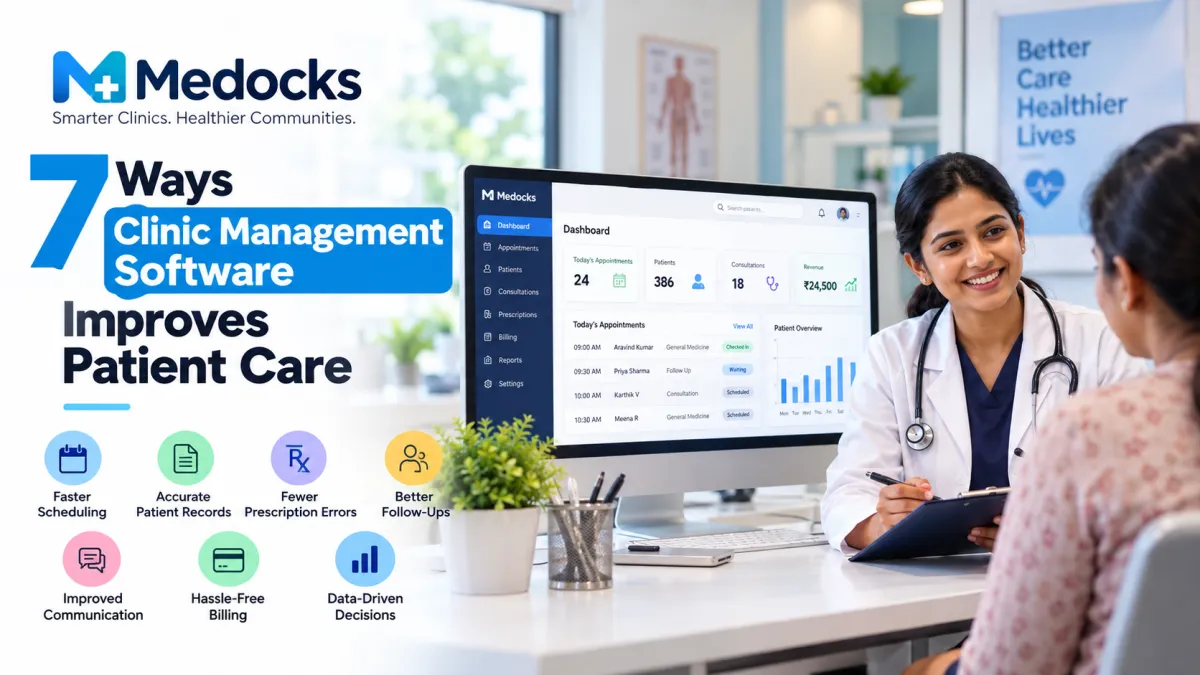
Clinic management software is one of the most effective tools for improving patient care in modern healthcare practices. When front-desk staff are buried in paperwork, doctors are hunting for old files, and patients are waiting too long, care quality suffers. By digitizing and automating daily workflows, clinic management software gives your team more time to focus on what matters most: the patient.
In this guide, we’ll walk through seven practical ways a modern platform like Medocks can improve patient care and the overall experience at your clinic.
What Is Clinic Management Software?
Clinic management software is a digital system that handles the administrative and clinical tasks of running a healthcare practice. These typically include:
- Appointment scheduling and reminders
- Electronic medical records (EMR)
- Billing and invoicing
- Prescription management
- Patient communication
- Reports and analytics
Instead of juggling registers, spreadsheets, and disconnected tools, everything lives in one secure place. You can explore the full range of tools on the Medocks website.
1. Faster, Smarter Appointment Scheduling
Long waiting times are one of the most common patient complaints. Manual booking leads to double bookings, missed slots, and frustrated patients.
Clinic management software fixes this with:
- Online and walk-in booking in one calendar
- Automated SMS or email reminders that reduce no-shows
- Easy rescheduling without phone tag
- Doctor-wise and time-slot management for better patient flow
Patient care impact: Shorter waits, fewer missed appointments, and a calmer clinic environment mean patients arrive less stressed and receive more focused attention.
2. Accurate and Instantly Accessible Patient Records
Paper files get misplaced, handwriting is misread, and patient history is often incomplete. In healthcare, those gaps can affect clinical decisions.
With digital electronic medical records (EMR), a doctor can instantly view:
- Past diagnoses and treatments
- Allergies and chronic conditions
- Previous prescriptions and test results
- Visit history and consultation notes
Patient care impact: Doctors make better-informed decisions in less time, and patients don’t need to repeat their medical history at every visit.
3. Fewer Prescription and Documentation Errors
Illegible handwriting and manual data entry can lead to dosage mistakes or missed drug interactions.
Digital prescription tools help by:
- Generating clear, standardized prescriptions
- Using saved templates for common treatments
- Keeping a complete medication history for every patient
- Reducing duplicate or conflicting entries
Patient care impact: Clearer prescriptions mean safer treatment and fewer follow-up calls to clarify instructions.
4. Better Continuity of Care and Follow-Ups
Good care doesn’t end when the patient leaves the consultation room. Missed follow-ups are a common reason treatments fail or conditions worsen.
Clinic management software supports continuity of care by:
- Setting automated follow-up reminders
- Tracking treatment progress over time
- Flagging patients who are overdue for check-ups
- Giving every doctor access to the same updated record
Patient care impact: Patients with chronic conditions such as diabetes or hypertension stay on track, and problems are caught earlier.
5. Improved Patient Communication and Engagement
Informed patients are more likely to follow their treatment plans. Clinic management software keeps communication simple and consistent through:
- Appointment confirmations and reminders
- Prescription and follow-up alerts
- Health tips and wellness messages
- Quick sharing of invoices and reports
Patient care impact: Patients feel supported and valued between visits, which builds trust and loyalty. Learn how Medocks can help your clinic stay connected with patients.
6. Transparent, Hassle-Free Billing
Billing confusion can sour an otherwise great visit. Manual billing often leads to errors, delays, and disputes.
With automated billing, you can:
- Generate accurate invoices in seconds
- Track payments, dues, and advances
- Offer multiple payment options
- Maintain clear financial records
Patient care impact: Clear, quick billing removes friction at checkout and leaves patients with a positive final impression of your clinic.
7. Data-Driven Decisions for Better Clinic Performance
Great patient care also depends on how well the clinic itself is run. Reports and analytics show you:
- Peak hours and busiest days
- Most common conditions treated
- Patient retention and return rates
- Revenue trends and doctor performance
Patient care impact: With these insights, you can adjust staffing, reduce bottlenecks, and plan services around real patient needs.
How to Choose the Right Clinic Management Software
Before you commit, look for a platform that is:
- Easy to use, so staff need minimal training
- Secure, with strong data protection and regular backups
- Customizable to your specialty and workflow
- Accessible on desktop, tablet, and mobile
- Well supported, with reliable onboarding and customer service
- Scalable, so it grows with your practice
If you’re ready to see how a modern solution fits your clinic, book a demo with Medocks and compare it against your current workflow.
Need a Custom Digital Solution for Your Healthcare Business?
Every clinic has unique needs, and sometimes off-the-shelf tools aren’t enough. For businesses looking for dependable digital, web, and software solutions to support their growth, you can also explore Rootpro.
Frequently Asked Questions About Clinic Management Software
1. What is clinic management software used for?
It manages appointments, patient records, billing, prescriptions, and reporting in one digital system, making daily clinic operations faster and more accurate.
2. How does clinic management software improve patient care?
It reduces waiting times, prevents record and prescription errors, enables timely follow-ups, and improves communication, so doctors can focus more on treatment.
3. Is clinic management software suitable for small clinics?
Yes. Many solutions are affordable and scalable, making them ideal for single-doctor practices as well as multi-specialty clinics.
4. Is patient data safe in clinic management software?
Reputable platforms use encryption, secure logins, role-based access, and regular backups to protect sensitive patient information.
5. How long does it take to implement clinic management software?
Most clinics can get started within days, depending on data migration needs and staff training.
Conclusion: Better Patient Care Starts with the Right Software
Better patient care isn’t only about clinical skill; it’s also about the systems behind the scenes. From faster scheduling and accurate records to safer prescriptions, better communication, and smarter analytics, clinic management software helps you deliver a smoother, safer, and more personal experience.
Ready to modernize your practice? Visit Medocks to see how the right software can transform the way you care for your patients.